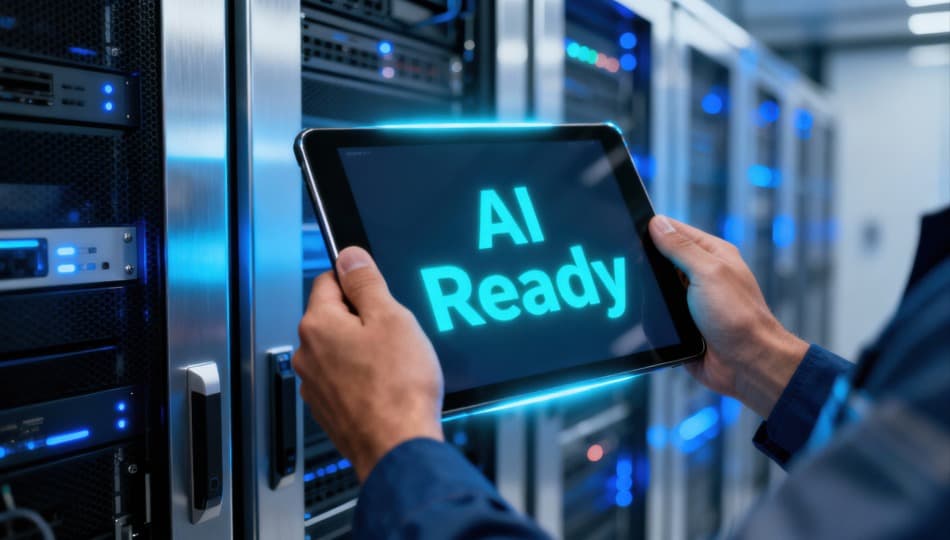

Why AI Implementation Fails Without the Right IT and Infrastructure

Many organizations are investing in artificial intelligence to improve efficiency, automate tasks, and make better decisions. In testing, AI often performs well because data is clean and environments are controlled.
This can make AI seem absolutely ready for full business use.
That’s what makes things interesting…when AI moves into production, challenges start to appear. Systems must handle messy data, more users, complex integrations, and real time security needs. When problems happen, the cause is usually not the AI model itself. It is the surrounding IT infrastructure, security setup, and operational processes not being ready for production scale AI.
To understand why this happens, it helps to look at what AI needs to work reliably in production environments.
Teams preparing to move beyond a proof of concept can use this production LLM deployment guide to review infrastructure, testing, monitoring, security and rollback requirements.
What AI Requires in a Production Business Environment
Enterprise AI systems rely on multiple technical layers working together. AI does not operate independently from infrastructure, security, and software systems.
| Layer | Role | Business Impact |
| Data Infrastructure | Moves, validates, and prepares data | Directly impacts AI accuracy and reliability |
| Application Layer | Connects AI to business systems and users | Determines real world usability |
| UI / UX | Controls how employees and customers interact with AI | Drives adoption and trust |
| Security and Identity | Protects data and controls access | Required for compliance and risk management |
| IT Operations | Maintains uptime, performance, and device health | Keeps AI usable day to day |
AI production failures happens when an AI system works technically but fails to deliver reliable business results because the surrounding infrastructure, data pipelines, or operational environment cannot support it at scale.
Organizations that understand this stack early reduce AI deployment risk and improve long term adoption.
How EspioLabs Supports Production AI and Software Delivery
At Espio, we focus on building custom AI solutions that integrate into real business workflows, working alongside Arcadion infrastructure, cloud, cybersecurity, and managed IT capabilities.
This includes AI solution architecture, custom software development, user experience design, and enterprise system integration. The goal is to move AI from proof of concept into reliable production tools used daily by employees and customers.
High performing AI deployments typically include:
- Clean and validated data pipelines
- Software designed for real production usage
- Interfaces designed for real user behaviour and decision making
Building AI applications is only part of the success equation. Long term reliability depends on the environment supporting the AI system.
The IT and Infrastructure Gap That Causes Most AI Failures
Many organizations assume cloud hosting automatically means production readiness. In practice, production AI environments require continuous operational management across devices, networks, identity systems, and security monitoring.
Managed IT Service providers like Arcadion support this layer across infrastructure, cybersecurity, managed IT, and AI enablement strategy. Across the market, organizations that rely only on traditional IT environments without modernization often experience AI performance instability during production rollout.
Common infrastructure gaps include:
- Endpoint and device security inconsistencies
- Identity and access management fragmentation
- Network latency and performance monitoring gaps
Cloud platforms provide compute and storage. Managed IT and security operations keep those environments stable, secure, and usable for real business users.
Signs Your AI Implementation Is At Risk
Early warning signs usually show up when AI systems are deployed into environments that were not designed for modern data and automation workloads.
Technical risks often appear as slow AI responses, unstable integrations, timeouts, or delayed data synchronization. Security risks may include excessive user access, unmanaged third party tools, or inconsistent monitoring visibility. Business risks appear when teams lose trust in AI outputs, usage declines, or IT support requests increase after deployment.
Common warning signals include:
- Increasing support tickets after AI launch
- Employees bypassing or avoiding the AI system
- Growing complaints about performance or reliability
When these signals appear, root causes are typically environment readiness, workflow design, or operational stability rather than model quality.
What Production Ready Enterprise AI Environments Look Like
| Area | Production State |
| Infrastructure | Redundant, monitored, and performance optimized |
| Security | Centralized identity and continuous monitoring |
| Data | Automated pipelines with validation and governance |
| Software | Version controlled deployment with rollback capability |
| User Experience | Tested against real operational workflows |
| IT Operations | Continuous monitoring and end user support |
Organizations that build across all six areas typically see higher AI adoption rates, stronger ROI, and fewer production disruptions.
This is why many organizations now treat AI as part of a full technology ecosystem rather than a standalone tool.
Integrated Technology Teams Are Driving Successful AI Adoption
Modern AI environments combine digital product engineering, infrastructure engineering, cybersecurity, and IT operations. EspioLabs focuses on AI solution development, software platforms, digital experience design, and enterprise integration. Arcadion supports organizations across infrastructure, cloud, cybersecurity, managed IT, and AI strategy enablement.
This integrated approach helps organizations:
- Move AI solutions into production faster
- Maintain strong security and compliance posture
- Scale AI safely across teams and departments
Organizations that treat AI as isolated technology projects often struggle. Organizations that treat AI as part of long term operational strategy tend to see stronger business outcomes.
The Business Cost of Skipping IT and Infrastructure Readiness
Organizations that skip environment preparation often face hidden costs. Teams may need to rebuild integrations, respond to breaches, or deal with downtime that erodes employee trust in AI systems.
Most organizations learn quickly that fixing production AI problems costs significantly more than building stable infrastructure and security foundations early.
Leading organizations now treat AI as an ongoing operational capability supported by infrastructure, security, and software engineering working together.
Is Your IT Environment Ready to Support Production AI?
AI success depends on the full technology environment around the model. Model quality matters but infrastructure reliability, software engineering quality, data governance and security operations determine long term business value.
At EspioLabs, working within the broader Arcadion technology ecosystem, we help organizations across Canada design and build production ready AI solutions that integrate into real workflows and align with enterprise infrastructure and security strategy.
Organizations planning AI initiatives should evaluate both AI development strategy and IT operational readiness early. Those that align both deploy AI faster, operate more reliably, and see stronger long-term results.
If you are evaluating AI deployment, contact our AI Agency in Ottawa to assess whether your infrastructure, security posture, and operational model are ready to support production AI at scale.